
What being named one of Forbes’ Best Employers for Women means, and what it challenges us to do next.
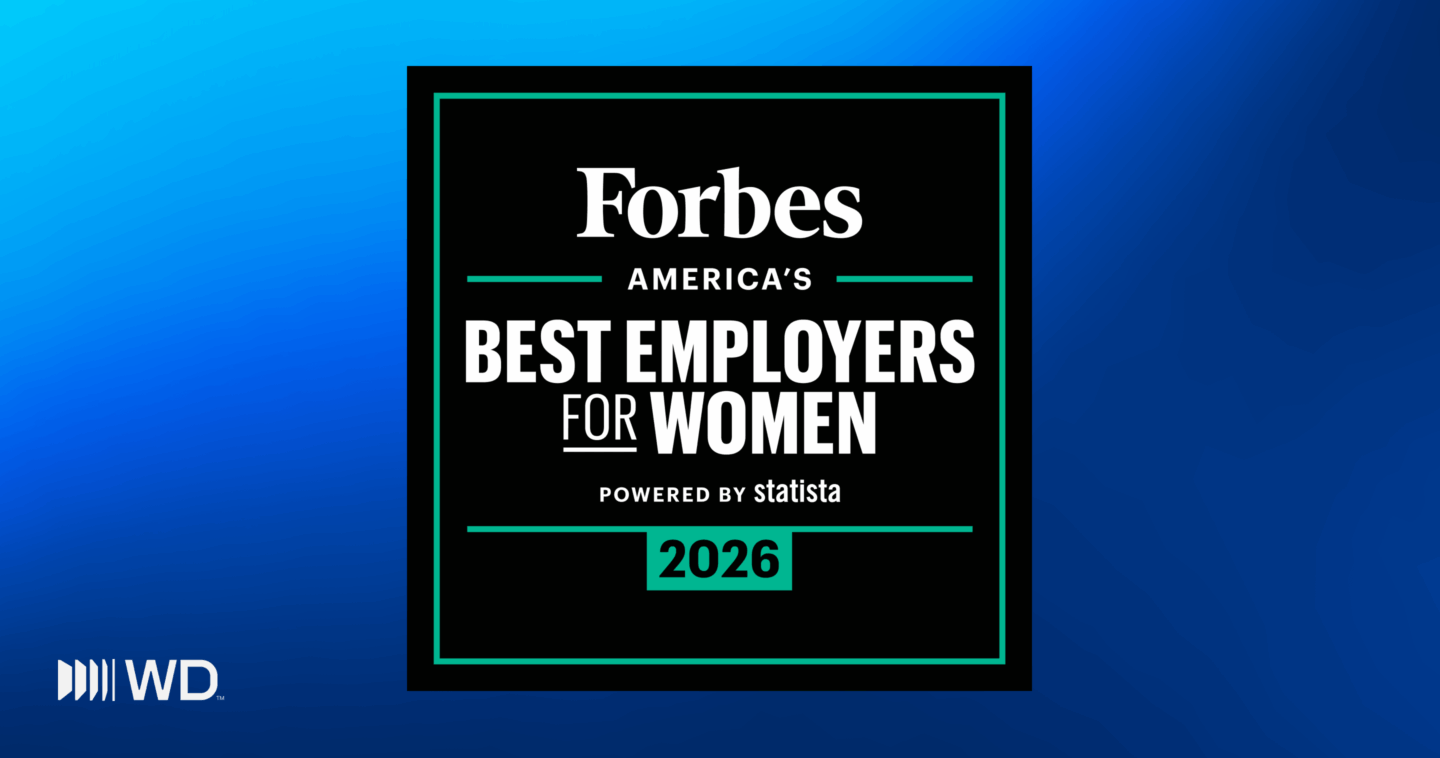
When I learned WD had been recognized as one of Forbes’ Best Employers for Women, I was proud. I was also humbled, because I know how much work is still ahead of us.
This recognition carries weight for me because it was not a self-nomination or a one-time survey. The list draws on three years of independent feedback from more than 140,000 women, covering culture, compensation, advancement, flexibility, representation, family support, and more. Employers were benchmarked against others in their industry, with WD ranking in the top 20 for ours.
But an award tells you where you’ve been. It cannot tell you whether you are ready for what comes next.
Every company is talking about AI right now. Fewer are talking about what this transformation means for people’s careers and what companies must do to help their people grow alongside it. That is the conversation I have been spending my time on.
So the question I want to explore is bigger than any award: How do we build a company where people from every background can stay, grow, and lead through one of the most significant technology transformations in decades?
The work that outlasts the award
We know we’re not where we ultimately want to be. There are areas where we know we can do better, and while this recognition is encouraging, it doesn’t change the work ahead.
Because, if we can build a workplace where women thrive through one of the biggest technological shifts in history, we’ll be building a better workplace for everyone. That’s the kind of progress that lasts.
Opportunity is the real test
So, how do we know whether we’re making that progress? The best measure isn’t hiring. It’s opportunity.
If I wanted to know whether a company was genuinely a good place to build a career, hiring is not where I’d look. I’d look at what happens after someone is already in the room. Does the door keep opening?
That means asking hard questions about:
- Reskilling: Are we building the next set of skills into our people, not just hiring for the skills we need today?
- Internal mobility: Can someone move into a different part of the business as their career grows, or are they boxed into the role they started in?
- Leadership development: Are we deliberately building the next generation of leaders, or are we hoping they emerge on their own?
- Sponsorship: Is someone putting a name forward for the room they’re not yet in?
- Stretch assignments: Are we giving people the harder job before they feel fully ready for it?
Hiring is a moment. Opportunity is everything that comes after it. That’s the harder thing to build, and the more honest measure of whether people can truly stay, grow, and lead.
AI is transforming work. We have a responsibility to transform people alongside it.
This is where AI raises the stakes. The opportunities we create now will determine whether people grow through this transformation or are left trying to catch up with it.
At WD, that means preparing them not for one new tool or one future role, but for continuous evolution: strengthening skills, confidence, and adaptability while protecting the judgment, creativity, empathy, purpose, and connection that make work human.
That’s the organization we’re building, because AI success won’t be measured only by what the technology becomes capable of doing. It will be measured by what our people become capable of doing alongside it.
The question I’ll leave you with
So back to the question I opened with: How do you build a company where people choose to stay, grow, and lead during one of the biggest technology transformations in decades?
You do not build that company by winning an award. You build it by treating people’s growth as the work rather than something that happens around the work. It is one decision at a time, in how people are developed, trusted, and given room to grow. Do that consistently enough and people will tell you before any list does.
So, as organizations rethink work in the AI era, what are you doing to make sure technology creates more opportunity for your people, not less?