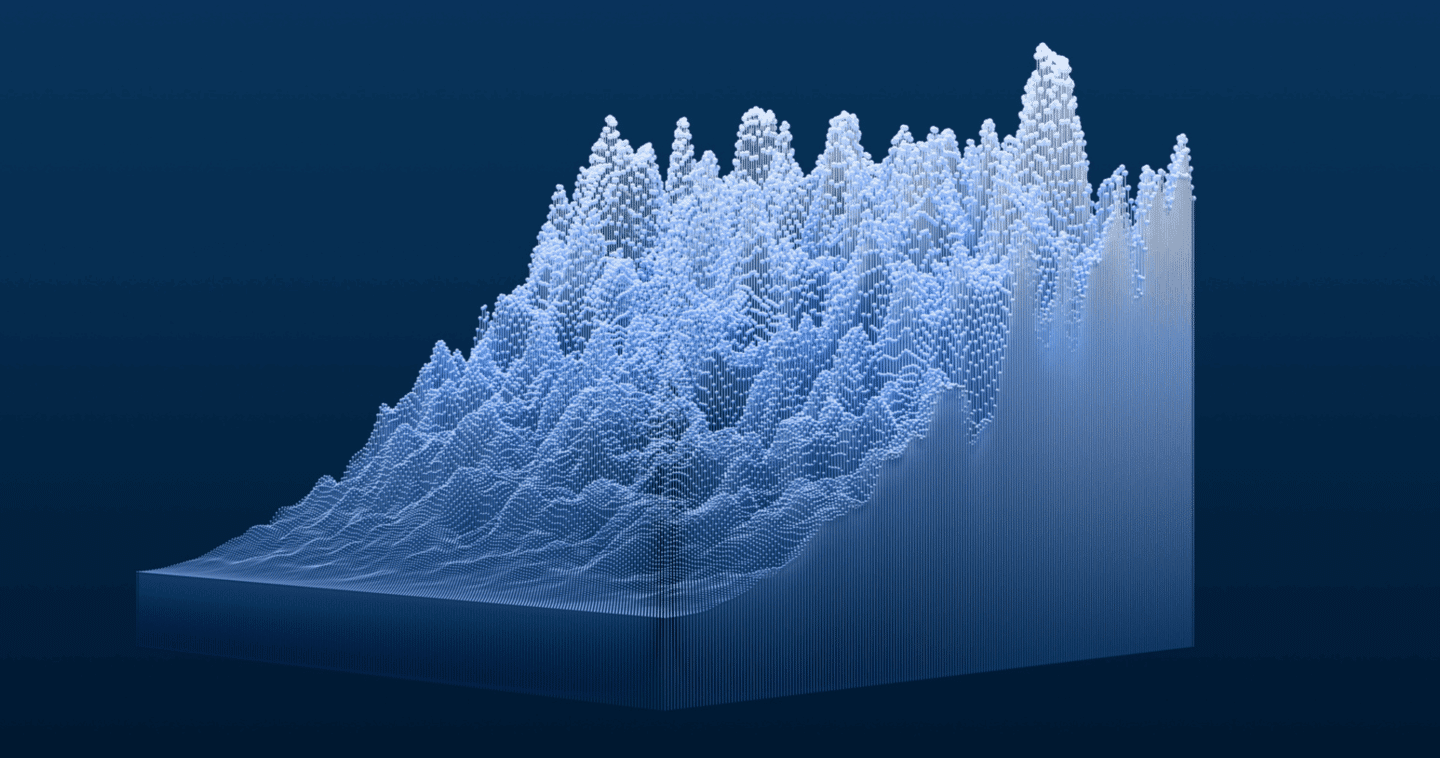

When it comes to AI workloads, compute scales linearly while data scales exponentially, continuously accumulating across training, inference, logs, embeddings, synthetic outputs, and retention windows.
Key Takeaways
- Compute and data scale through different operating models, so treating storage as a secondary capacity purchase creates long-term risk.
- AI data center planning needs tier-aware retention because training data, inference logs, embeddings, and checkpoints carry different access and cost profiles.
- Storage architecture shapes AI system flexibility by preserving the data needed for tuning, audit, recovery, and model improvement.
AI data centers now sit inside a resource model that older infrastructure plans were not built to handle. Data center electricity consumption is projected to rise from 485TWh in 2025 to 950TWh in 2030, which shows how AI infrastructure growth is already pressing against power, space, and capacity planning limits.
The harder problem is asymmetry. Compute usage rises, falls, and refreshes around workload schedules. Data persists after every training run, inference session, evaluation pass, and audit requirement. That makes storage architecture a primary design decision for any AI data center built for multi-year operation.
Compute investment follows refresh cycles while data persists
Compute investment becomes cyclical as GPU clusters age, utilization targets shift, and training schedules move across capacity pools. Data does not reset on the same cycle. Once created, validated, logged, embedded, or retained, it becomes part of the operating base the AI system must keep managing.
A neocloud can add GPU capacity for a new customer cohort, then rebalance that capacity after the contract period or workload peak. The inference logs, output traces, safety evaluations, model checkpoints, and customer-specific fine-tuning records from that period can remain useful after the compute window closes. Those data assets carry context, compliance value, and model improvement potential.
This gap creates a planning error. Finance teams can model compute as a refreshable asset tied to utilization, but storage grows as a cumulative estate tied to history. Treating both with the same planning logic hides the long-term cost curve.
AI workloads create operational data far beyond training datasets
AI workloads generate much more than curated training data because production systems create operational records at every step. Prompts, responses, embeddings, retrieval traces, evaluation results, intermediate files, metadata, and policy logs all add storage weight after the model is already deployed.
A retrieval-augmented generation service illustrates the pattern. Each query can produce vector lookups, source document references, prompt templates, response variants, user feedback, latency traces, and safety review records. A single response is small, but the full production record becomes much larger when teams retain evidence for debugging, tuning, compliance, and customer quality reviews.
Data creation is already moving at a scale that reflects this type of operational reality, with IDC forecasting that global annual data generation will increase from 218ZB in 2025 to 718ZB by 2030.* AI systems add a new layer because they produce data while using data. That feedback loop makes deletion policy, tier placement, and retrieval cost central to model operations.
Traditional infrastructure planning models fail under compound data growth
Traditional infrastructure planning fails when it assumes storage growth tracks compute growth at a manageable ratio. AI breaks that assumption because compute can be scheduled against known workload peaks, while data grows through continuous accumulation, reuse, retention, and replication across model pipelines.
A platform team planning for 10PB of curated training data can miss the larger estate forming around it. Duplicate staging copies, synthetic data variants, embedding indexes, checkpoint archives, evaluation datasets, and inference logs can exceed the original training set over time. The storage problem becomes less about one dataset and more about the lifecycle of every derivative.
| Planning area | What works for compute | What breaks for data |
|---|---|---|
| Capacity timing | Provisioning can follow known training schedules and utilization targets. | Storage must often absorb data created before, during, and after every workload cycle. |
| Refresh planning | GPUs can be replaced on a defined hardware cycle. | Retained datasets can outlive refresh cycles and still need access, protection, and placement. |
| Cost control | Idle compute can be reassigned or powered down. | Stored data continues to consume power, racks, replication capacity, and operational effort. |
| Performance design | Peak throughput can be sized for specific jobs. | Access patterns shift as data moves from hot training use to reuse, audit, and archive. |
| Risk exposure | Compute shortfalls delay a workload window. | Storage mistakes create durability, compliance, and recovery problems that can compound over years. |
The practical constraint is simple. You can defer a training run when compute is tight, but you cannot safely ignore an expanding data estate. Storage architecture becomes the control plane for cost, access, and resilience.
AI data center storage tiers determine long-term system economics
AI data center storage tiers play an outsize role in determining economics because different data types have different access patterns, retention value, and performance needs. A single tier forces every byte into the same cost structure, even when only a small share needs the highest performance at any given time.
Training batches, active feature stores, and current checkpoint writes need high-throughput access. Older checkpoints, raw source data, inference logs, synthetic variants, and compliance records need durable capacity at lower unit cost. WD fits into this execution context through storage architectures that place data according to lifecycle stage instead of treating all AI data as equally hot.
A practical tiering model starts with five controls:
- Keep active training inputs close to GPU clusters during scheduled runs.
- Move older checkpoints to lower-cost capacity when reuse frequency drops.
- Store inference logs according to retention value and audit requirements.
- Separate embedding indexes from source documents when access patterns differ.
- Rebalance tiers as workloads move from experimentation to production service.
The tradeoff is not speed against capacity. The better question is which data needs speed, for how long, and at what unit cost. That framing protects performance without forcing every retained byte into the most expensive tier.
Capacity planning breaks when retention requirements continue expanding
AI teams rarely know the full value of data at creation time. Logs that look disposable during launch can become important for fine-tuning, incident review, model behavior analysis, or regulatory evidence months later.
A model serving system can start with 30-day inference log retention, then move to 180 days after customer escalations, policy reviews, or evaluation needs. That shift multiplies storage requirements without a matching change in GPU count. The compute estate looks stable while the data estate absorbs a new operating burden.
Retention also creates a governance constraint. Deleting too aggressively reduces the evidence available for audit, quality review, and model improvement. Retaining everything on premium tiers wastes budget and rack space. The durable design choice is tier-aware retention, where access frequency, legal value, and model usefulness decide placement. Capacity planning must start with data lifecycle policy, then map infrastructure to that policy.
Compute provisioning solves peak demand while storage absorbs history
Compute provisioning solves workload peaks because training, batch inference, and evaluation jobs can be scheduled, queued, or moved across clusters. Storage absorbs history because it must preserve what those jobs produce, even after the compute task has ended.
A foundation model team can provision GPUs for a major training run, finish the run, and release capacity back into the pool. The resulting checkpoints, validation results, failed experiment records, tokenized datasets, and safety evaluations still need durable storage. Some files will support future fine-tuning. Some will support audit. Some will never be read again, but you need policy to know which is which.
This distinction matters for AI infrastructure capacity planning because peak compute and persistent storage follow different failure modes. Compute scarcity slows throughput. Storage scarcity forces deletion, tier pressure, or emergency procurement. Those responses carry heavier long-term risk because they affect model quality, data lineage, and recovery posture. Compute is a scheduling problem. Storage is an institutional memory problem.
AI infrastructure costs shift from GPU acquisition to data retention
Data retention takes up more AI infrastructure budget as deployments mature because production systems typically accumulate operational history faster than teams retire it. GPU acquisition attracts attention at buildout, but retained data establishes the multi-year cost floor for power, space, replication, rebuild time, and management effort.
An AI lab running frequent fine-tuning cycles will typically preserve base datasets, candidate datasets, rejected datasets, checkpoints, evaluation runs, and production feedback. The cost of storing that material depends on how much sits on high-performance tiers, how much moves to capacity tiers, and how much must stay replicated for durability. The wrong placement turns useful history into an avoidable cost burden.
The financial question also changes. Cost per GPU hour matters during training, but cost per stored petabyte matters throughout the service life of the system. A storage plan that looks acceptable at 5PB can fail at 50PB if it relies on manual movement, flat tiers, or short retention assumptions. Unit economics at scale are an architecture choice.
Storage architecture determines how long AI systems remain flexible
Storage architecture decides which data remains usable, which data becomes too expensive to keep, and which data becomes too slow to retrieve when teams need it. AI systems keep their options open when data placement follows workload value over time.
A disciplined architecture lets teams keep raw data for later reprocessing, preserve inference records for behavior analysis, retain evaluation sets for regression testing, and move older material into capacity tiers without losing control. WD’s role in that picture is practical: capacity-optimized HDD foundations support large retained-data estates while flash remains aligned to active, latency-sensitive work.
Storage ultimately defines how much an AI system can remember, reuse, defend, and improve over time. Compute powers the current job. Data determines what the next job can know.
* Source: IDC Global DataSphere Forecast, 2026–2030